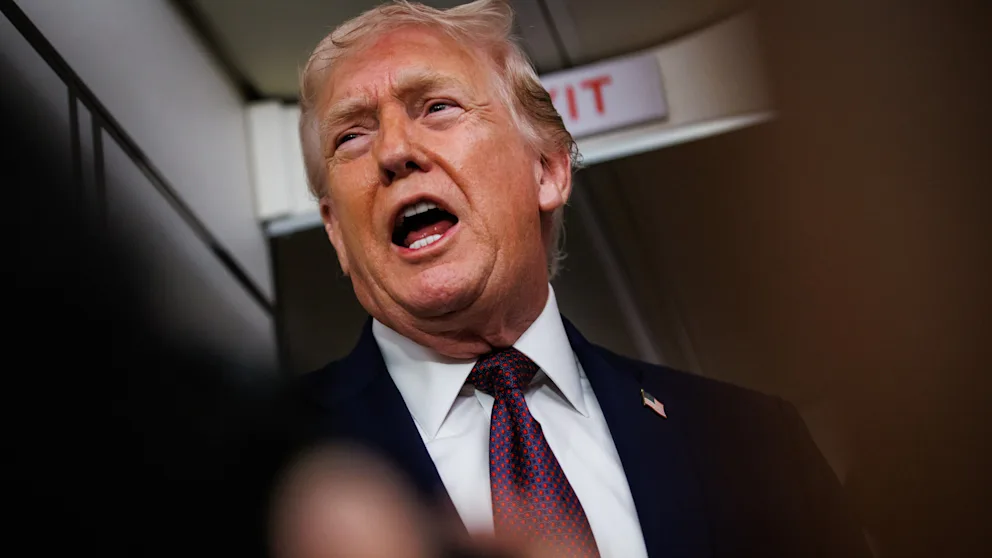
仿佛是为了提醒我们美国总统是如何被克里姆林宫的欺骗手段所俘虏(并非肉体上的),唐纳德·特朗普周三告诉路透社,弗拉基米尔·普京“准备达成协议”结束对乌克兰的战争。当被问及是什么阻碍了这一圆满结局时,特朗普回答说:“泽连斯基。”而就在一周前,俄罗斯向这个普京视之为异类的国家发射了数量空前的导弹。
但奇怪的是:特朗普实际上是在无意中破坏普京的战争努力,甚至动摇他的权力。或者至少,并非有意为之。这一切都与石油有关。俄罗斯本质上是一个石油国家:克里姆林宫能否为其战争(以及公民的养老金)提供资金,取决于其石油和天然气生产收入是否维持在一定水平。而近来,这种收入一直在下降,这不仅是因为制裁机制不够严密,还因为碳氢化合物交易价格的持续下跌。目前石油供应过剩。更令普京恼火的是,特朗普决心进一步、更快地压低油价。
原因在于,特朗普在国内支持率面临的最大威胁是生活成本上涨。降低油价(或者说降低美国工业的能源投入)是白宫解决这一政治问题的首选方案。特朗普对委内瑞拉的计划——在推翻前总统马杜罗后,他现在声称自己是委内瑞拉的统治者——与此密切相关。美国政府目前正在斡旋出售此前被美国封锁的5000万桶委内瑞拉石油。上周,特朗普召集了美国最大石油公司的负责人,要求他们在地球上已知的最大油田——委内瑞拉——投资“至少1000亿美元”,以压低油价。事实上,油价下跌的前景对石油巨头来说并非悦耳之音。但雪佛龙的老板尽责地宣称,该公司可以将产量提高50%,壳牌的负责人也附和道:“我们准备就绪。”
无论他们是否真的增产,普京的经济前景都比近四年前他率领坦克向基辅进军以来的任何时候都要黯淡。这场军事行动原本旨在几天之内达成目标。克里姆林宫最得力的宣传员弗拉基米尔·索洛维约夫上周向观众抱怨道:“一切都与经济有关。经济确保战争的胜利。它不能保证胜利,但没有经济就赢不了……我们为什么要允许我们的经济陷入彻底的混乱?”或许索洛维约夫指的是连官方媒体现在都称之为“飞涨的通货膨胀”——人们喜爱的食品价格正以每年超过20%的速度上涨。总之,他接着论证说,俄罗斯应该摆脱对石油收入的依赖,建立“一种不同的经济模式”。
某种程度上来说,确实如此:俄罗斯的银行一直在向克里姆林宫提供巨额贷款以促进军火生产,而没有遵循任何通常的信用风险评估要求,这实际上是在迎合克里姆林宫的意愿。克雷格·肯尼迪是一位俄罗斯能源分析师,曾任职于摩根士丹利和美国银行,他上个月发布了一份令人信服的报告,揭示了真实情况。“石油和天然气行业正滑向自上世纪90年代以来最严重的危机……在银行业,克里姆林宫过度依赖预算外、国家主导的贷款来资助军火制造……这在俄罗斯银行体系的核心地带造成了大量不透明、未经衡量且管理不善的违约风险。”正如肯尼迪总结的那样,克里姆林宫现在“被迫做了两件它原本希望避免的事情:削减战争经费和提高公众税收”。
食品价格飞涨和银行业危机叠加,历来是引发民众强烈不满,甚至在某些情况下导致政权垮台的永久配方。在伊朗,正是阿扬德银行因背负巨额不可持续贷款而倒闭,引发了席卷全国的示威游行。《华尔街日报》报道称:“阿扬德银行的倒闭既是经济崩溃的象征,也是加速经济崩溃的催化剂,最终引发了抗议活动。”伊朗也是一个依赖石油收入的国家,而石油收入一直在下滑。
上周,乌克兰驻联合国大使安德烈·梅尔尼克在联合国指出,普京近期升级战争的背后,正是俄罗斯经济即将崩溃的阴影。他认为,如今的俄罗斯就像苏联解体前的最后几年一样(“一个僵化、过度扩张、背负着难以承受的军费开支和内部衰败的体制”)。
然而,最终导致苏联政权垮台的却是油价暴跌。正如已故的叶戈尔·盖达尔在其著作《帝国的崩溃:对现代俄罗斯的启示》中所述,这位前苏联官员曾在1992年担任俄罗斯代理总理,“苏联解体的时间线可以追溯到1985年9月13日。就在这一天,沙特阿拉伯石油部长谢赫·艾哈迈德·扎基·亚马尼宣布,沙特王室决定彻底改变其石油政策……在接下来的六个月里,沙特阿拉伯的石油产量增长了四倍,而油价的实际跌幅却大致相同。结果,苏联每年损失约200亿美元,没有这笔钱,国家根本无法生存。”
事实上,亚马尼——我在那场剧变的年份采访过他,当时我正在为《金融时报》报道石油市场——并非有意推翻苏联政权。这是出于截然不同的目的而制定的政策的意外后果,与欧佩克内部政治密切相关。
同样,特朗普压低油价的决心纯粹是国内政治问题。事实上,如果特朗普真的打算将石油作为迫使克里姆林宫停止轰炸乌克兰的有力武器,他早就批准了由参议员林赛·格雷厄姆提出的两党共同支持的《制裁俄罗斯法案》。该法案将授权总统对与俄罗斯能源部门有业务往来的国家进口商品征收高达500%的关税。两周前,坚定的乌克兰支持者格雷厄姆声称,在就此问题进行了一次“富有成效”的会晤后,特朗普已经“批准”了他的法案。但是,特朗普再一次避开了与普京的任何对抗。
相反,他却无意中破坏了他如此令人作呕地崇拜的人。
As if to remind us just how much the President of the United States is a creature captured by the Kremlin’s seduction techniques (and I don’t mean physically), Donald Trump told the Reuters news agency on Wednesday that Vladimir Putin was “ready to make a deal” to end the war on Ukraine. Asked by his interviewer what, then, was impeding such a happy resolution, Trump replied: “Zelensky.” This in a week when Russia fired an unprecedented number of missiles at the nation whose very existence Putin regards as an aberration.
But here’s the odd thing: Trump is actually sabotaging Putin’s war effort and even his hold on power — by mistake. Or, at least, unintentionally. It’s all about oil. Russia is essentially a petro-state: theKremlin’s ability to finance its war (and indeed its citizens’ pensions) depends on maintaining a certain level of income from its oil and gas production. And that, recently, has been subsiding, not just because of a less than watertight sanctions regime but the inexorable fall in the traded price of hydrocarbons. There is a glut. And the kicker (to Putin’s testicles) is that Trump is determined to drive the price down still further and faster.
The reason is that the biggest threat to Trump’s domestic popularity is the rise in the cost of living. Driving down prices at the pump (or indeed the energy inputs of US industry) is the White House’s preferred solution to that political problem. Trump’s plan for Venezuela— of which he now claims to be the ruler, after the surgical removal of the former President Maduro — is intimately connected with this. The US government is now brokering the sale of 50 million barrels of Venezuelan oil that had previously been locked in by an American blockade. And last week Trump summoned the heads of the US’s biggest oil companies, demanding they invest “at least $100 billion” in what happens to be the planet’s biggest known oil basin — to drive down oil prices.
Actually, the prospect of lower prices is hardly music to the ears of Big Oil. But Chevron’s boss dutifully declared that it could boost its production by 50 per cent, and the head of Shell piped up: “We are ready to go.”
Whether they do or not, the economic outlook for Putin is bleaker than at any time in the almost four years since he propelled his tanks towards Kyiv in a military campaign that was meant to achieve its objectives in a matter of days. The Kremlin’s favourite propagandist, Vladimir Solovyov, moaned to his viewers last week: “It’s all about the economy. It ensures victory in war. It does not guarantee it, but you can’t win without it … Why are we are allowing total mayhem in our economy?” Perhaps Solovyov was referring to what even the state-monitored press now refers to as “galloping inflation” — the prices of favourite foods are rising at an annual rate of over 20 per cent. Anyway, he went on to argue that Russia should cease to be dependent on its oil revenues and build “a different kind of economy”.
In a way, it is: Russia’s banks have been obliging the Kremlin by issuing vast loans to boost munitions production, without any of the usual credit risk assessment requirements. Craig Kennedy, an analyst of Russian energy and a former banker at Morgan Stanley and Bank of America, produced a compelling report last month on the true situation. “The oil and gas sector is sliding into its worst crisis since the 1990s … In the banking sector, the Kremlin’s excessive reliance on off-budget, state-directed lending to fund the arms manufacturing sector … has created a large pool of opaque, unmeasured and poorly managed default risk at the heart of the Russian banking system.” As Kennedy concludes, the Kremlin has now “been forced to do two things it hoped to avoid: cut funding for the war and raise taxes on the public”.
A combination of galloping food price inflation and a banking crisis is the time-honoured recipe for seething popular discontent and, in certain circumstances, the overthrow of the regime responsible. In Iran it was the collapse of Ayandeh Bank, under a vast pile of unsustainable loans, which provoked the demonstrations that spread across the country. As The Wall Street Journal reported: “The failure became both a symbol and an accelerant of an economic unravelling that ultimately triggered the protests.” Iran, too, is a nation dependent on oil revenues that had been skittering downwards.
At the UN last week Ukraine’s ambassador, Andriy Melnyk, argued that it was precisely the imminent implosion of the Russian economy which lay behind Putin’s recent escalation of the war, and that the country now resembled the Soviet Union in its final years before collapse (“a rigid, overextended system burdened by unbearable military expenditures and internal decay”).
Yet it was an oil price collapse which finally did for the Communist regime. As the late Yegor Gaidar, a former Soviet apparatchik who served as acting Russian prime minister in 1992, set out in his book Collapse of an Empire: Lessons for Modern Russia, “The timeline of the collapse of the Soviet Union can be traced to September 13, 1985. On this date, Sheikh Ahmed Zaki Yamani, the minister of oil of Saudi Arabia, declared that the monarchy had decided to alter its oil policy radically … During the next six months oil production in Saudi Arabia increased fourfold, while oil prices collapsed by approximately the same amount in real terms. As a result, the Soviet Union lost approximately $20 billion a year, money without which the country simply could not survive.”
As a matter of fact, Yamani — whom I spoke to in that seismic year, as I was then covering the oil market for the Financial Times — was not interested in bringing down the Soviet regime. It was an unintended consequence of a policy designed for quite different purposes, connected with the internal politics of Opec.
Similarly, Trump’s determination to drive down oil prices is a purely domestic political matter. Indeed, if Trump were remotely inclined to use oil as a serious weapon to persuade the Kremlin to stop bombarding Ukraine, he would long ago have approved the bipartisan Sanctioning Russia Act lined up by Senator Lindsey Graham. This would authorise the president to impose a tariff of up to 500 per cent on imports from countries doing business with Russia’s energy sector. A fortnight ago Graham, a firm supporter of Ukraine, claimed Trump had “greenlit” his bill, after a “very productive” meeting on the matter. But, once again, Trump veered away from any confrontation with Putin.
Instead he is sabotaging the man he admires so disgustingly — by accident.